A buyer's agent pulls the resale certificate for a two-bedroom unit at Toscana, sees the milestone inspection line marked complete, and tells her client the building is clear. She's right, for the tower she's closing in. She has no idea whether the same is true two hundred feet away, in the building with a different certificate of occupancy on the same gated drive.
That gap matters more in 2026 than it did five years ago. Toscana is often talked about as a single oceanfront complex on South Ocean Boulevard, and in a lot of ways it functions like one: one guarded entrance, one beach club, one set of valet stands. But it is three separate condominium buildings, each with its own construction date, its own homeowners association, and its own position on the inspection and reserve-funding calendar that Florida rewrote after the Champlain Towers South collapse in Surfside in June 2021.
One Address, Three Certificates of Occupancy
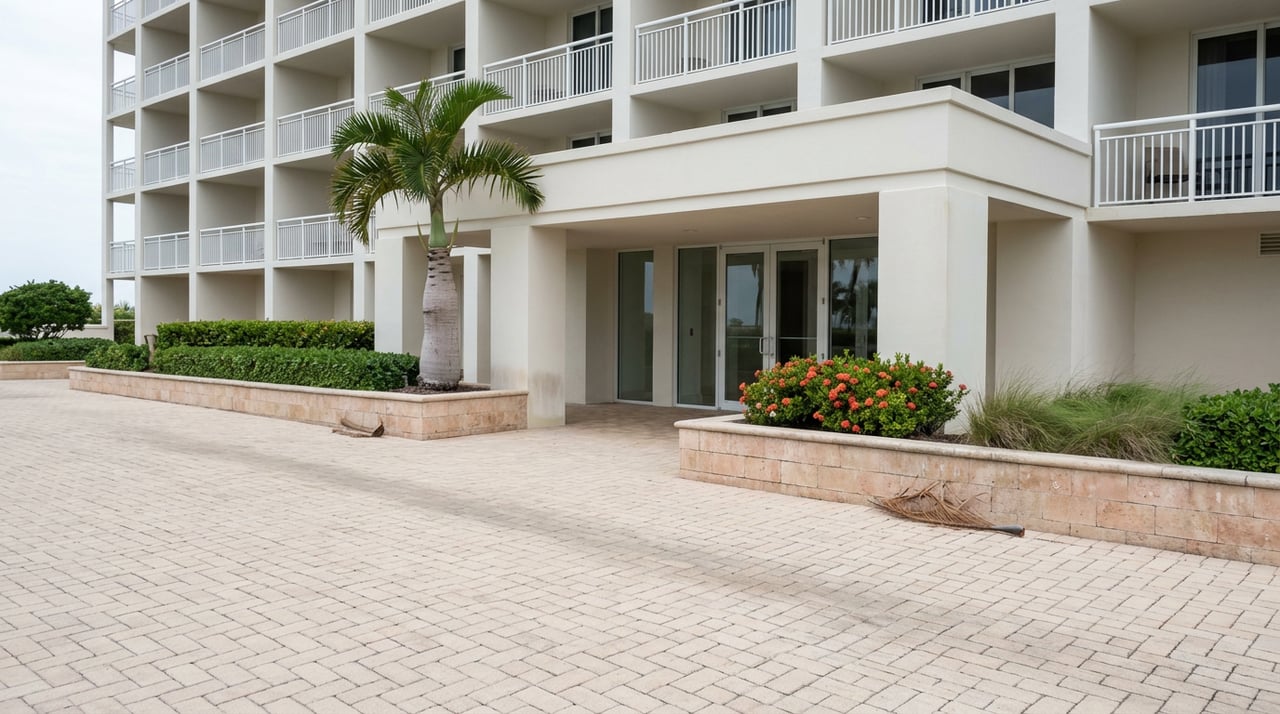
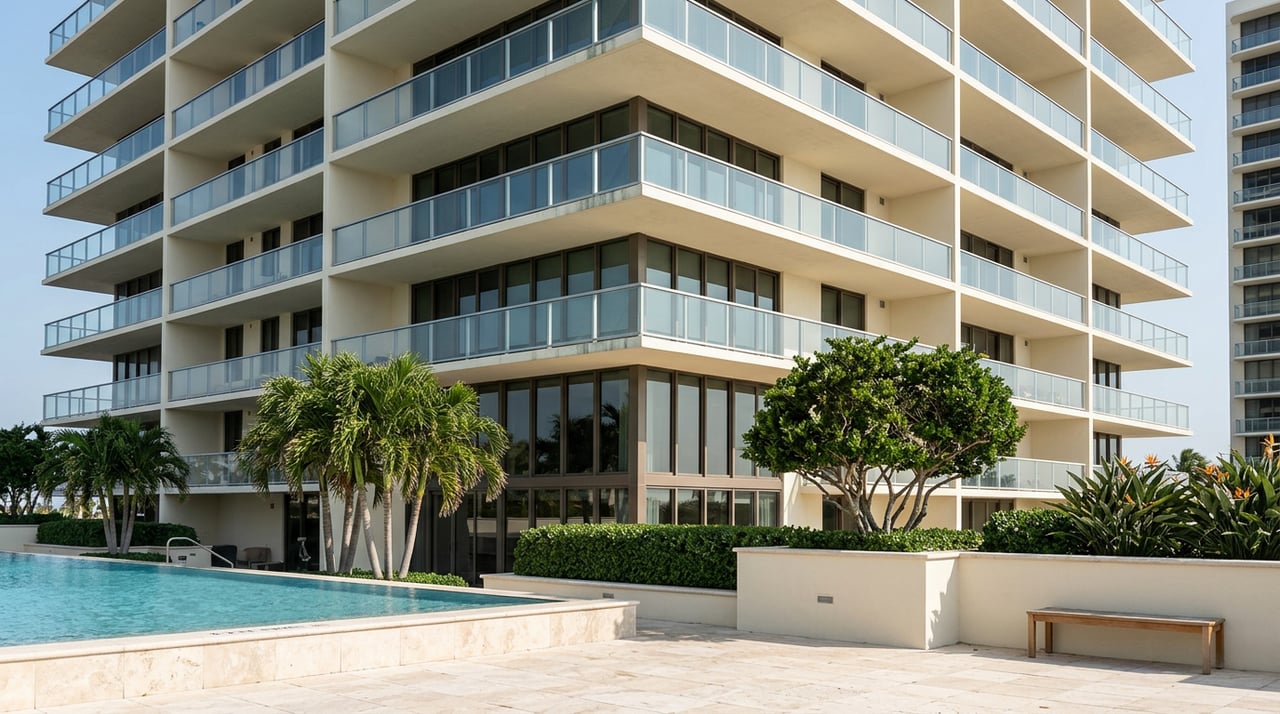
Toscana North was the first tower to open, completed in 2000 with 17 floors and 143 units. Toscana West followed in 2002, a 16-floor building with 118 units. The newest of the three, generally referred to as Toscana South, wrapped construction in 2004 with 18 floors and 159 units. Add the unit counts together and the total comes to 420, the same figure that shows up in some property databases attached to a single entry for "Toscana Towers, completed 2000," as though the whole complex opened at once. It didn't. Three buildings, three completion years, three separate clocks.
Here's how those three clocks read as of today:
| Tower | Completed | Age in 2026 | Position on Highland Beach's 25-year recertification threshold |
|---|---|---|---|
| Toscana North | 2000 | 26 | Already crossed, recertification window open now |
| Toscana West | 2002 | 24 | Crosses in 2027 |
| Toscana South | 2004 | 22 | Crosses in 2029 |
Two Clocks Are Running at Once, Not One
Florida's statewide milestone inspection law, Statute 553.899, sets a default trigger of 30 years for buildings three stories or taller, but it gives coastal jurisdictions the authority to require the first inspection earlier, at 25 years. Highland Beach adopted that earlier threshold. The town's own recertification program requires buildings 25 years or older to complete a full recertification every 10 years, and buildings 40 years or older to do it every 7 years, a schedule that runs independently of, and on top of, the state's separate Structural Integrity Reserve Study mandate that came out of the same 2022 legislative session.
Put plainly, a building can be square with the state's SIRS paperwork and still be behind on the town's own recertification, or the reverse. They're not the same requirement, they don't share a filing deadline, and at Toscana, they don't share a building age either. As of today, only Toscana North, at 26, is old enough to fall inside Highland Beach's 25-year window. West, one year shy at 24, isn't there yet. South, at 22, has three years to go. A completed recertification for North says nothing about whether West or South have started theirs, because the town's building official treats them as three separate structures, not one complex.
The Reserve Deadline Already Came and Went
Separate from any inspection, Florida's Structural Integrity Reserve Study requirement carried its own hard dates, and one of them has already passed. Associations formed before July 2022 that are unit-owner-controlled were required to complete a SIRS by December 31, 2025. Starting January 1, 2026, those same associations lost the ability to vote to waive or underfund reserves for eight mandatory SIRS components: roof, load-bearing walls and primary structural members, fire protection, plumbing, electrical, waterproofing, windows and exterior doors, and any other item whose deferred maintenance or replacement cost crosses a state-set dollar threshold that adjusts annually. Full funding is now the law, not a board's discretion, for any budget adopted after that date.
For a Toscana buyer, this changes the question from "has the SIRS been done" to "what does the completed study say the reserve balance needs to be, and is the association actually funding it." Each of the three towers should have its own document on file right now. If one association can't produce it, that's worth flagging before an offer goes any further, regardless of how the building looks from the lobby.
Financing Runs on Its Own Calendar Too
Mortgage underwriting shifted alongside the law. Fannie Mae retired its Limited Review option for condo loans, so every purchase now requires a Full Review that pulls the association's budget, financial statements, reserve study, delinquency data, and insurance documents before a loan can close. More documents requested means more chances for an underwriter to flag something. Statewide, more than 1,400 Florida condo buildings sat on Fannie Mae's restricted list as of May 2026, a status that blocks conventional financing and pushes buyers toward portfolio loans or other non-conforming products, typically at a higher rate.
Nothing in the available records places any specific Toscana tower on that list, and this piece isn't suggesting that any of them are. The point stands regardless: financing eligibility now runs on the same paperwork as the inspection and reserve requirements, and a lender's underwriter is going to ask the same questions a careful buyer's agent should already be asking before the contract is signed.
What the Law Actually Requires the Seller to Hand Over
Under Florida Statute 718.503, sellers must give buyers a copy of the milestone inspection summary, if one exists, along with the association's most recent Structural Integrity Reserve Study, or a written statement that no SIRS has been completed. Buyers who don't receive these documents promptly retain a statutory right of rescission, generally three days, sometimes longer in certain resale situations, that can unwind a deal on a technicality even when both sides still want to close.
For a three-tower complex, that means requesting these documents by tower name and association, not by the property's marketing name. Toscana North's paperwork, Toscana West's paperwork, and Toscana South's paperwork are three separate files, filed by three separate boards, and asking for "Toscana's" documents without specifying which one gets you an incomplete answer at best.
Before the Inspection Contingency Expires
- Confirm which of the three towers the unit sits in, and request that tower's milestone inspection report by name, not the complex name.
- Ask whether Phase 1 or Phase 2 was required. Phase 2 only follows if an engineer found substantial structural deterioration during the initial visual review.
- Request the completed Structural Integrity Reserve Study and the current funding percentage for each of the eight mandatory structural components.
- Ask whether the specific tower appears on Fannie Mae's restricted list, since that determines whether conventional financing is even available for that building.
- Confirm the resale certificate covers assessments already approved, not only assessments already levied, since approved-but-unlevied assessments typically transfer with the unit at closing.
Common Questions
If Toscana North needs recertification and West doesn't yet, does that lower North's resale values? Not on its own. A completed inspection with no Phase 2 findings is a routine, budgeted cost for the association. Values move on how well the reserve is funded and whether a special assessment follows, not on the calendar date of the inspection itself.
Does a financing restriction on one tower affect the others? No. Fannie Mae and Freddie Mac evaluate each association separately. A restriction on one Toscana tower's warrantability status has no bearing on whether another tower's units qualify for conventional financing.
Who pays for recertification and reserve funding, the seller or the buyer? It depends on timing and what the resale certificate says. Assessments already levied before closing are typically a seller cost. Assessments approved but not yet levied often transfer with the unit. This is negotiated deal by deal and should be confirmed against the resale certificate before final offer terms are set.
Toscana looks like one address from the parking garage to the beach club, and in a lot of ways that's exactly the point of buying there. But once you're inside a contract, it stops being one complex and becomes three separate buildings with three separate paper trails. Knowing which tower you're actually buying into, and what that tower's documents say right now, is the difference between a clean closing and a surprise at the table.
If you're weighing a purchase or a listing anywhere in Toscana, or along Highland Beach's oceanfront more broadly, Judith Randon Realty has spent two decades inside these buildings' associations and paperwork. Schedule a Free Home Valuation & Consultation and we'll go through exactly what your tower's documents say before you write an offer.