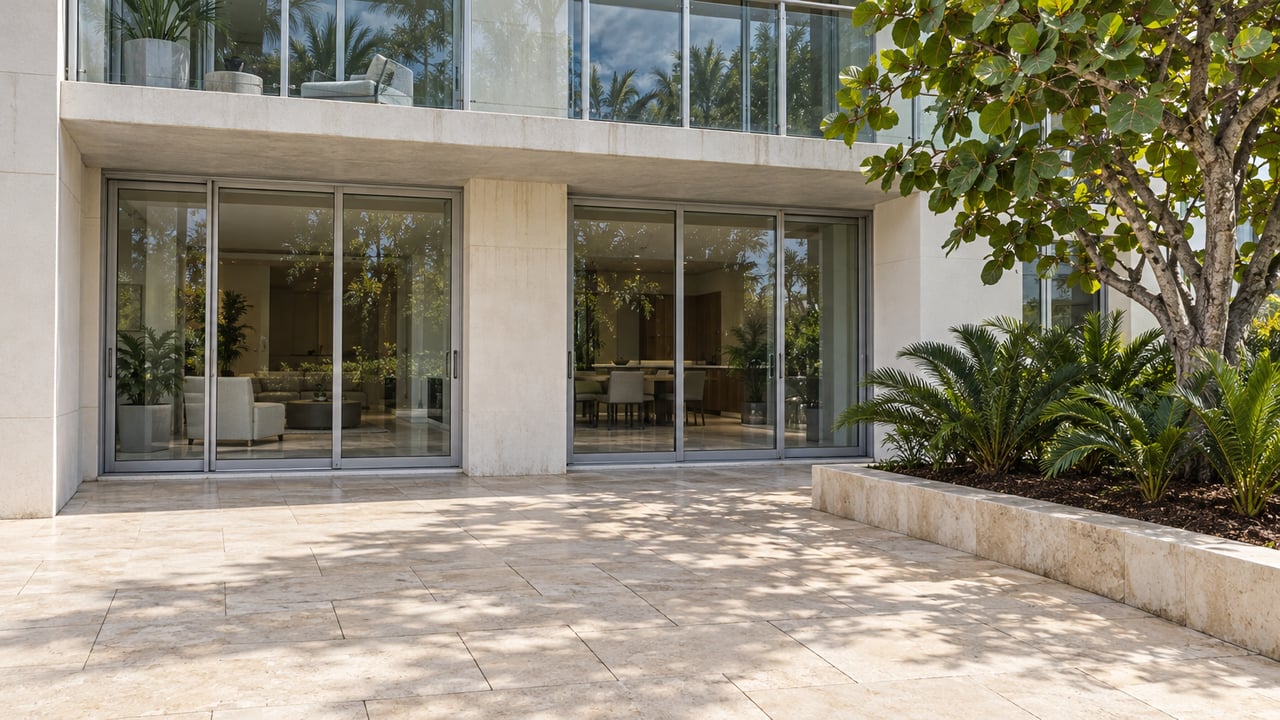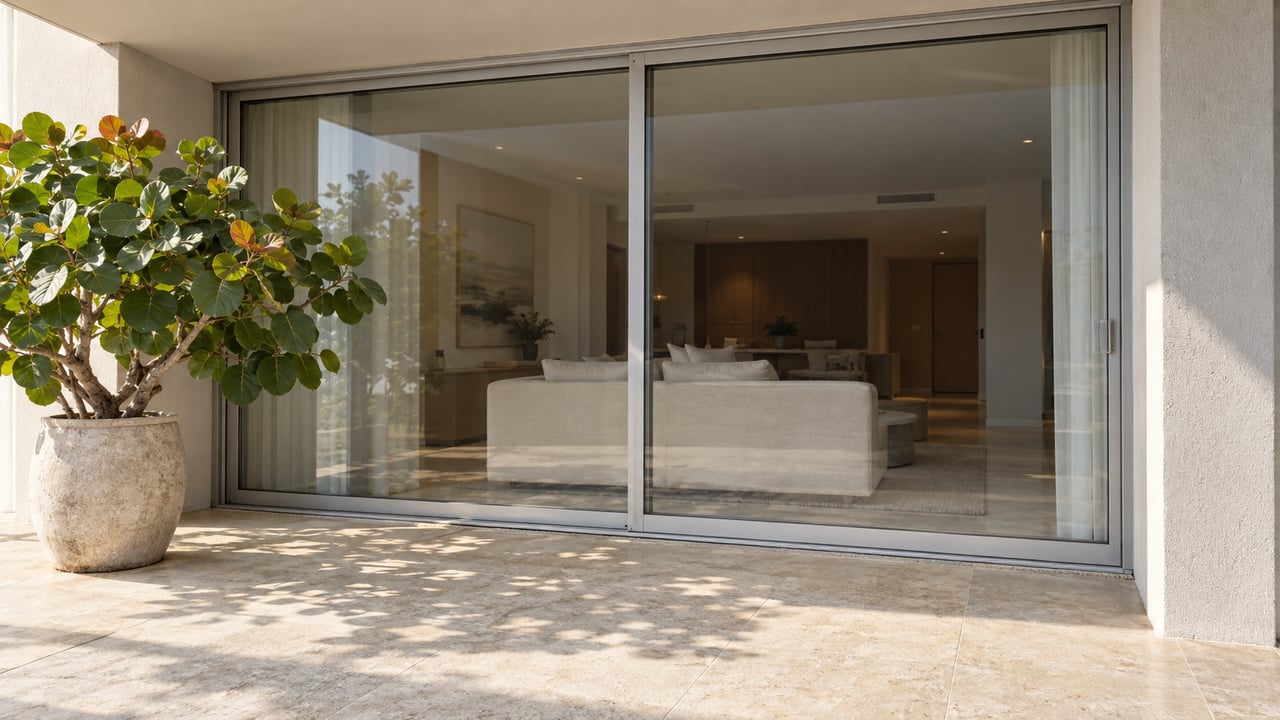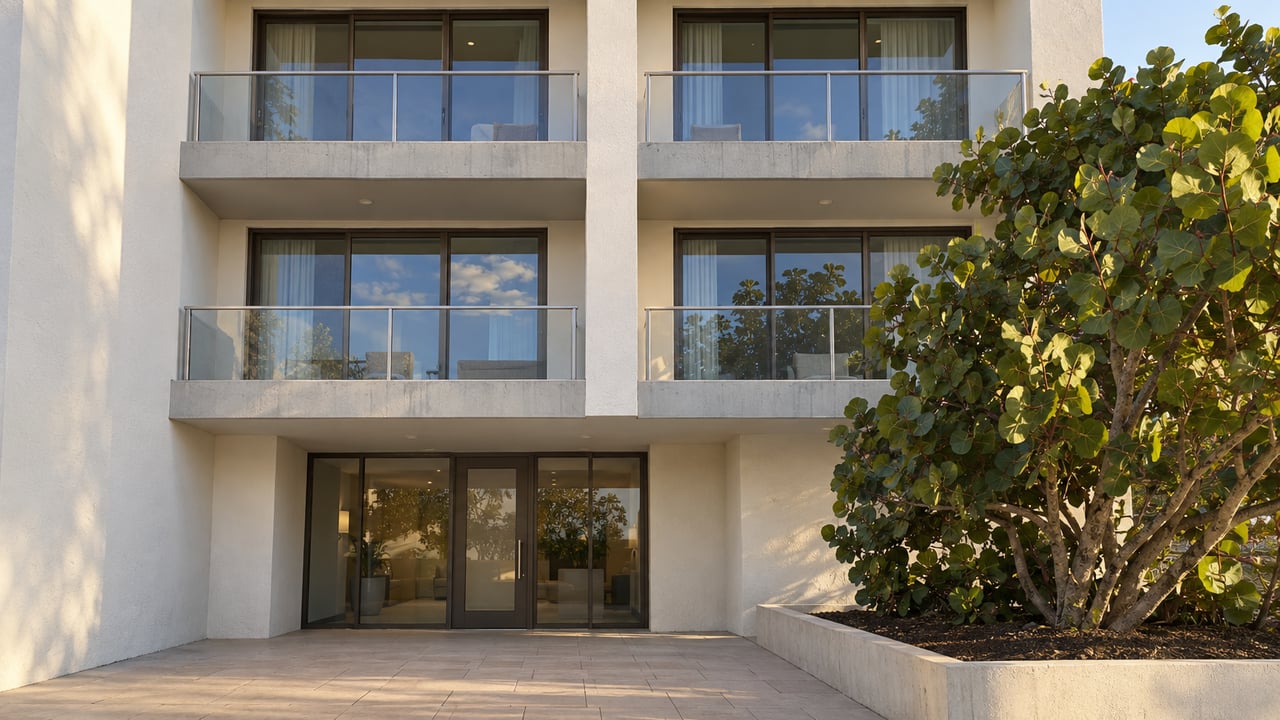
If you live on this three-mile ribbon between Boca Inlet and Delray, you have already seen the wooden stakes appear overnight, the yellow tape, the small hand-lettered signs. You have also probably received a note from your building asking you to draw the curtains after sunset. The reason for both is the same, and it is a fact worth internalizing before the next hatchling emergence: Highland Beach records more annual sea turtle nests than either Boca Raton or Delray Beach, according to the Town's own Sea Turtle Program.
That is the quiet thesis of this post. The stretch of sand outside your slider is not incidentally a nesting beach. It is one of the more productive nesting beaches in Palm Beach County, and from March 1 through October 31 that biology shapes small parts of daily life here in ways that a first-year resident often misses.
The three-mile stretch that punches above its weight
State records cited by the Town show more than 1,100 nests logged in a recent season along Highland Beach's roughly three miles of coastline. For scale, Boca Raton's five miles of city beach are monitored by the Sea Turtle Conservation Team at Gumbo Limbo Nature Center, and 2026 has been an extraordinary year there: as of early June, Gumbo Limbo had documented 42 leatherback nests along Boca beaches, more than double the local annual average and the highest number ever recorded there. Dr. Jeanette Wyneken, who directs the FAU Marine Science Laboratory on the Gumbo Limbo campus, framed the season as unusually strong for the species.
Highland Beach sits directly north of that survey zone and shares the same current-driven approach off the Gulf Stream. When leatherback numbers spike in Boca, the pattern here tends to move in the same direction. Loggerheads, which are the dominant nester along the Palm Beach County barrier island, drive most of the local numbers, with green turtles making a smaller contribution.
The practical takeaway is not that Highland Beach is a tourist attraction for turtles. It is that if you own or rent a unit facing the Atlantic anywhere from Toscana south to the Delray line, your building sits inside one of the more active nesting corridors on the continental United States coast. Everything below follows from that.
What Ordinance 554 quietly asks of you after dark
The single most consequential local rule for residents is the Town's beachfront lighting requirement. Ordinance 554 requires all beachfront lighting to be off from dusk to dawn between March 1 and October 31, and the code sits at Article V, Chapter 4, Section 8. It is not advisory. It is why your building's exterior sconces switch to amber, why pool deck fixtures dim after sunset, and why the corridor along A1A gets noticeably darker between spring and Halloween.
The mechanism is straightforward. Hatchlings orient toward the brightest horizon, which on an undeveloped beach is the reflection of moon and stars on the water. As FWC explains in its statewide lighting guidance, artificial light from a single unshielded fixture, or from an interior lamp visible through a slider, can pull an entire nest's worth of hatchlings inland toward pool decks, drainage grates, and A1A. The hatchlings that go the wrong way generally do not survive.
A few things residents often do not realize:
- Interior lights matter as much as exterior ones. FWC guidance notes that white light inside a unit can be brighter through the glass than any fixture on the balcony, particularly on higher floors with wide sliders. Closing blackout drapes at sunset is the single cheapest thing you can do.
- Cell phone flashlights and camera flashes count. If you walk the beach after dark in season, leave the phone in your pocket.
- Amber and red long-wavelength bulbs (560 nm and above) are the compliant swap for any fixture you actually need for safety. Motion sensors are preferred over always-on lighting.
Buildings that have gone through a lighting retrofit tend to do it once, at a capital-project scale, and then live with the result for a decade. If your association has not addressed it recently, this is the season it comes up at meetings. Questions specific to compliance run through Town Planner Ingrid Allen at 561-637-2012.
Those wooden stakes, and the volunteers who put them there
The staked-off patches you step around on a morning walk are the work of the Town's trained sea turtle monitoring volunteers. They walk the beach at first light, identify tracks from the night before, distinguish true nests from false crawls, and mark each confirmed nest with stakes and signage. The nest is then left alone for roughly two months of incubation, then checked daily for signs of emergence, then excavated three days after hatch to inventory the results. Boca's team at Gumbo Limbo runs the same protocol along its five miles.
For a resident this translates into one rule that sounds obvious and is regularly ignored: do not touch the stakes, the tape, or the sand around them. The nests are shallow and easily compacted. A beach chair set down a foot too close can collapse an egg chamber. The Town's guidance also asks residents to clear furniture, umbrellas, and toys off the sand at the end of the day, because obstacles left overnight regularly trap females coming ashore and hatchlings coming out.
Where to actually see it happen
You do not have to walk the beach at midnight hoping to spot a nesting turtle. Two structured programs run out of Gumbo Limbo Nature Center, ten minutes south at 1801 N. Ocean Boulevard in Boca Raton:
The Turtle Walk program runs on select summer evenings and starts with an educational session before the group caravans to the beach in hopes of observing a nesting loggerhead. Sightings are not guaranteed, and the program enforces a strict hands-off protocol under state permitting rules. Jessica Trease, a marine turtle specialist on the center's conservation team, has spoken publicly about the program's emphasis on responsible viewing rather than spectacle, in an April 2026 profile in The Invading Sea.
The Hatchling Release program is the other side of the cycle. When hatchlings are found in the wash-back or brought in from disoriented nests, they are released at night on the beach under supervision. Both programs fill quickly once the summer schedule posts, and admission to the center itself is free. A caveat worth flagging: the nonprofit-run sea turtle rehabilitation clinic that formerly operated on the Gumbo Limbo campus closed in 2025, and the center now focuses on conservation, research support, and public education rather than active rehab. Injured turtles from this stretch of coast are routed elsewhere.
If you find a turtle in trouble
Residents who walk the beach year-round eventually find something. A stranded hatchling in a dune line at dawn. A nesting female that got turned around. A dead or injured adult in the wrack line after a storm.
The number to save in your phone is the FWC Wildlife Alert Hotline at 888-404-FWCC (888-404-3922). It runs 24 hours. The Town's guidance asks callers to be ready to describe location, condition, and whether the animal is marked with spray paint, which would indicate it has already been documented by monitors. Do not attempt to move a turtle yourself. Do not pour water on a hatchling. Do not carry one to the surf. If a nesting female appears disoriented and heading toward A1A, keep your distance, kill any nearby lights, and call.
A season, not an inconvenience
The rhythms of nesting season are what a lot of buyers coming from the Northeast do not price in when they first tour a Highland Beach condo. The darker evenings on the amenity deck. The stakes on the morning walk. The building memo in April about drapes and pool lights. Those things are not friction. They are the reason the beach outside your window still functions as one of the most productive nesting habitats in the state, and they are a large part of what makes owning here different from owning a comparable unit ten miles inland.
If you are weighing a move into the building next door, or thinking about how your current unit shows during nesting season, Judith Randon Realty works this stretch of A1A every day and can walk you through the building-specific lighting compliance, association policies, and seasonal listing dynamics that a portal will never surface. Schedule a Free Home Valuation & Consultation to talk through what this season means for your address.