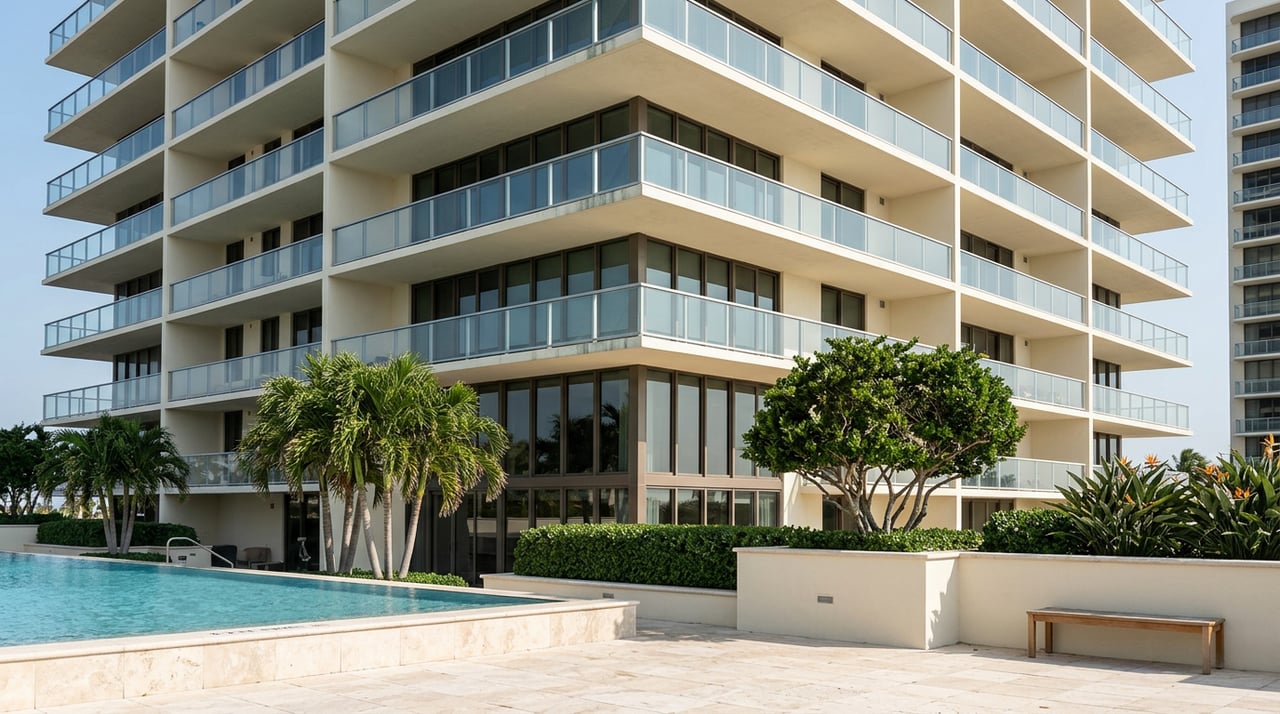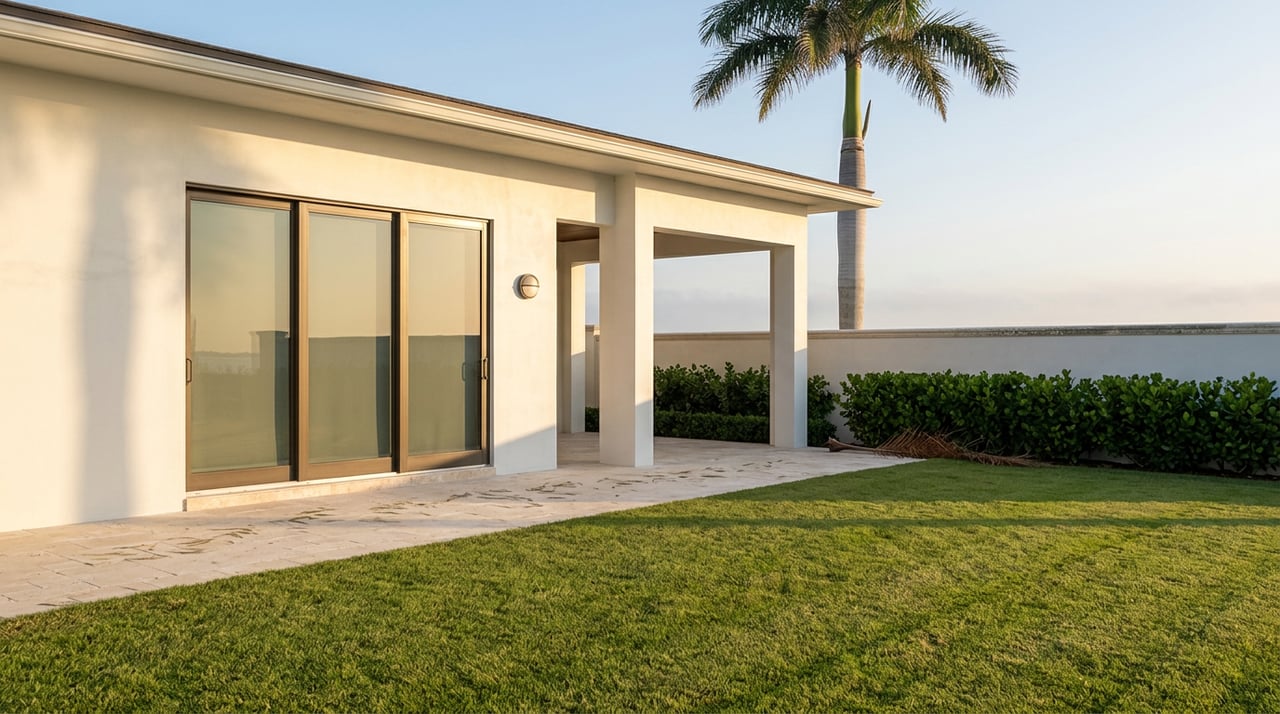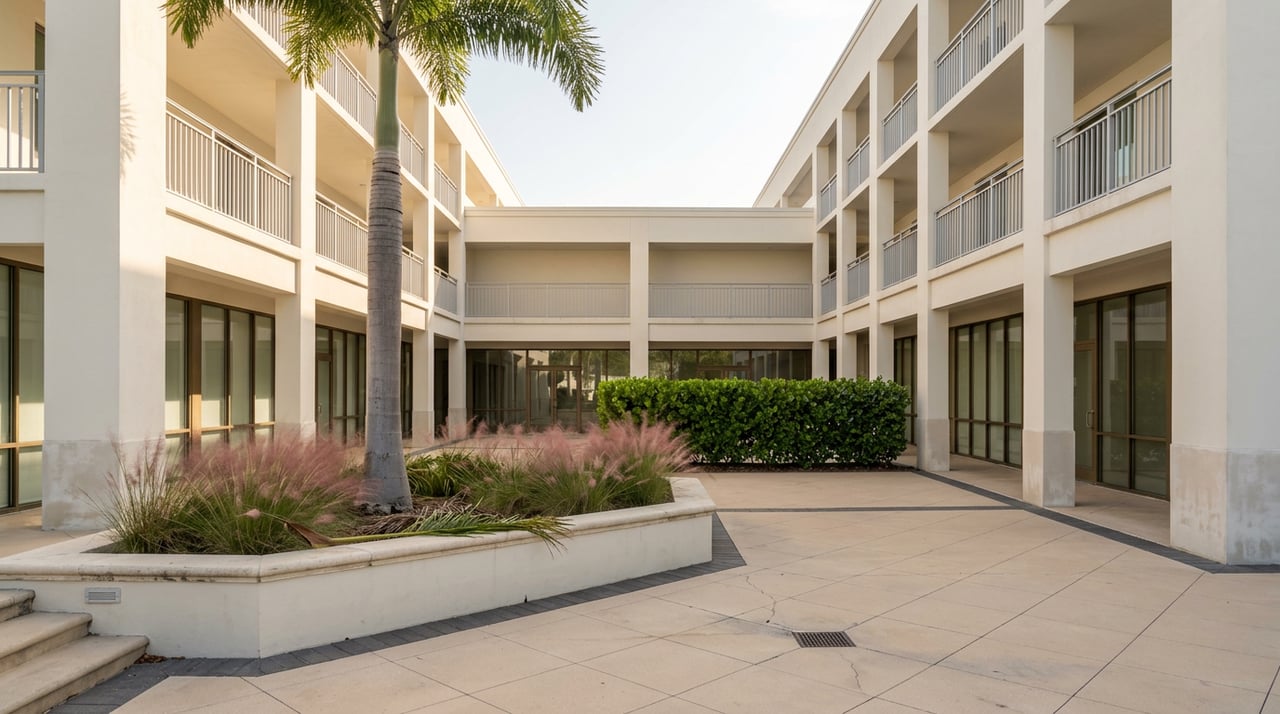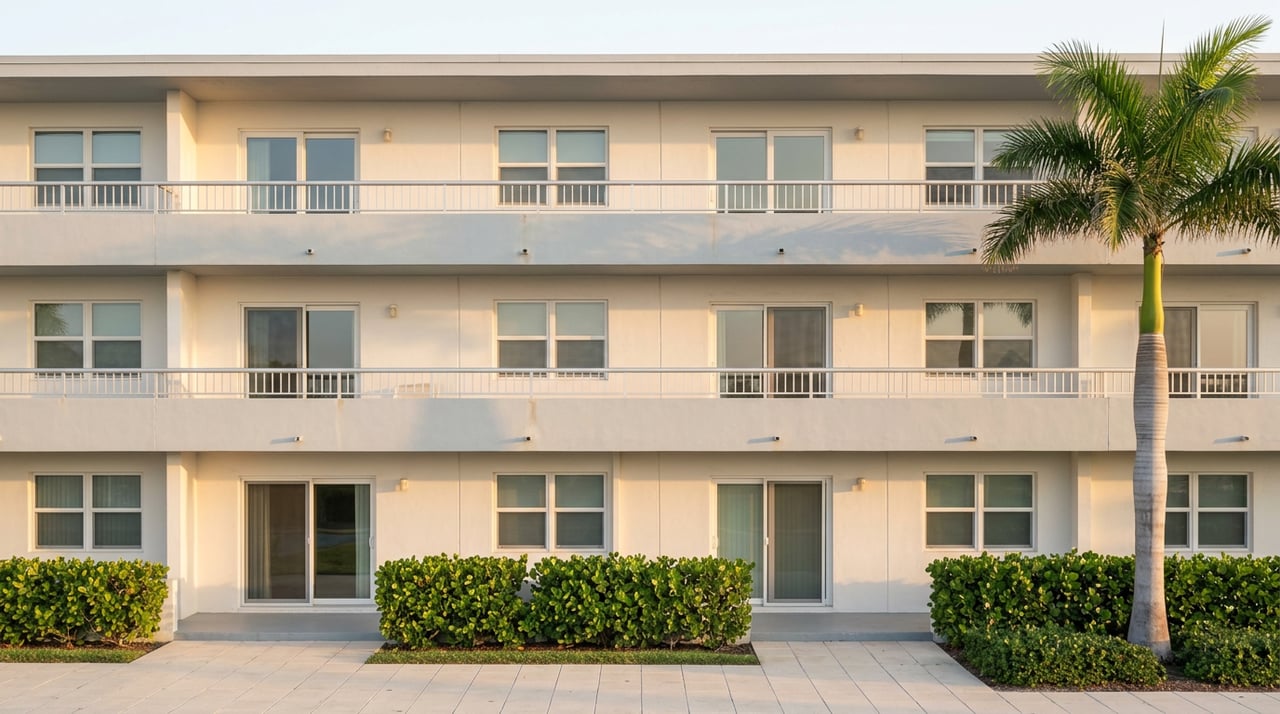
Drive south on A1A and you pass a run of buildings that have been standing since before most of their current owners were born. Bermuda High, split by the road into matching low-rise wings, has been there since 1968. Banyan House, a year older, still catches full ocean light off its eleventh floor. Coastal House went up in 1970. Costa Del Rey followed in 1974, right at the line where Delray Beach gives way to Highland Beach. These are not landmarks behind velvet rope. People live in them, swim from them, and in a meaningful number of cases right now, wait in them for a buyer.
Turn west past Swinton Avenue and the picture flips. A well-priced three-bedroom in Lake Ida can go under contract before the open house sign comes down.
That contrast isn't a coincidence of two listings. It's the pattern running through the whole city's MLS data this fall, and it has almost nothing to do with which property people want more.
Two Listings, Two Clocks
Delray Beach single-family homes that closed in August 2026 took a median of 30 days to go under contract, and the city carried 4.8 months of house inventory as of September 15, 2026. Condos and townhomes closing in that same August window took a median of 49 days, sitting on 6.9 months of supply. Price behavior tells the same story from a different angle: 41.3 percent of active house listings had already cut their asking price as of that mid-September snapshot, against 49.0 percent of condos and townhomes. Some local trackers show the split stretching even further, with certain condo segments running closer to three times a house's typical time to contract.
None of that reads like a demand problem. Sundy Village's completed first phase has put more people on Atlantic Avenue on a given evening than it has in years. Pineapple Grove keeps drawing buyers who want to walk to a gallery opening. The slowdown is concentrated in the paperwork stage, not the showing stage, and the reason traces back to a law most house buyers never have to think about.
The Clock Nobody Put on a House
In 2022, the Florida Legislature passed Senate Bill 4-D in response to the Champlain Towers South collapse in Surfside. The law created a statewide milestone inspection mandate under Florida Statute 553.899: condo and cooperative buildings three stories or taller must undergo a structural inspection by December 31 of the year they turn 30, or 25 if the building sits within three miles of a coastline. Delray Beach's barrier island qualifies for the shorter clock, and the city's own milestone recertification page spells out what a completed inspection has to contain and what happens if repairs turn up.
House Bill 913, effective July 2025, layered on a second requirement: a Structural Integrity Reserve Study, or SIRS, that prices out the long-term cost of a building's roof, load-bearing structure, waterproofing, plumbing, and other major systems. Most existing associations had to complete their first SIRS by December 31, 2025, according to the Division of Condominiums, Timeshares and Mobile Homes. That deadline has already passed. By the time you're reading a Delray condo listing today, the building behind it should already have both documents on file, not a promise that they're coming.
A 2021 analysis by The Coastal Star, the monthly paper covering this exact stretch of coast, found that condominiums along the barrier island from South Palm Beach to Boca Raton averaged 44 years old, with roughly two-thirds built in the 1970s or earlier. Buildings that old crossed the 25-year coastal threshold decades before the law existed, so under the statute's catch-up schedule, buildings with a certificate of occupancy issued on or before July 1, 1992 were required to complete their first milestone inspection by the end of 2024 and their reserve study by the end of 2025. Both deadlines have already passed. What a buyer is reviewing today isn't a process still underway. It's a finished paper trail, an inspection report and a reserve study that should already sit in the association's files. A three-bedroom house built in 1985 in Lake Ida carries no equivalent paperwork at all. A one-bedroom unit in a building from 1970 does, by law, regardless of how well the unit itself has been maintained.
What a Buyer Is Actually Reviewing Now
For a house, due diligence is a home inspection and an insurance quote. For a condo in one of these older buildings, the document list is longer:
- The milestone inspection report, including a phase two if the phase one turned up structural concerns
- The current SIRS and the reserve fund's percentage of full funding
- The last twelve to twenty-four months of board meeting minutes
- Written disclosure of any special assessment that has been discussed, approved, or levied
- The master insurance policy, its deductibles, and how much the premium moved at last renewal
Reading all of that, following up on anything vague, and deciding whether the numbers make sense takes real time. It also explains why the rescission window matters more than it used to. Florida law has long given resale condo buyers a short window to cancel after receiving the complete document package, and 2025 legislative changes extended that window in some circumstances from three business days to seven. Which version applies to a given contract depends on timing and the specific paperwork involved, so this is worth confirming in writing rather than assuming.
Why the Slower Clock Isn't a Warning Sign
It would be easy to read a 49-day or 88-day median as evidence that Delray's condo buyers have lost interest. The building activity around Atlantic Avenue argues otherwise. What's actually happening is that a transaction which used to take four weeks now takes six to twelve, because there's a stack of engineering and financial documents that didn't exist a few years ago, and both sides are learning to work through it methodically rather than skip it.
That extra time cuts both ways. For a buyer, it means there's room to actually read the reserve study before writing an offer, not after. Elsewhere in South Florida, buildings that spent decades waiving reserves to keep monthly dues low have hit owners with assessments in the six figures once the SIRS caught up with reality. Cricket Club in North Miami and Mediterranean Village in Aventura are two documented examples where per-unit assessments reached well into six figures after years of underfunded reserves came due at once. Those numbers aren't Delray-specific, but they're the reason a thorough document review now takes the place of a quick glance at the HOA fee.
For a seller in one of Delray's older coastal buildings, the same clock is an argument for preparation rather than concern. If your building's milestone inspection and SIRS are complete and the reserve fund is in reasonable shape, that's a selling point worth stating plainly in the listing, not a technicality to bury in an addendum. If the paperwork isn't ready, buyers will find that out anyway during the review period, and it's better to control that conversation early than have it happen during a shortened rescission clock.
Common Questions
Does every condo in Delray Beach need a milestone inspection? Only buildings three stories or taller that have reached the age threshold, 25 years for coastal buildings under three miles from the shoreline, 30 otherwise. A low-rise duplex or a newer building well under that age won't be subject to the same review, though local building departments can layer on their own recertification rules.
If the listing says there's no pending assessment, is that the whole picture? Not necessarily. Assessments typically get discussed in board minutes months before they're formally levied, so a clean answer on the estoppel doesn't rule out a conversation already underway at the board level. Reviewing recent minutes alongside the reserve study is how that gap gets closed.
Is a longer days-on-market number a reason to walk away from a condo? Not on its own. Given how many buildings on this stretch of coast are working through the same inspection and reserve requirements at once, a longer marketing period is often just the paperwork stage taking its normal course. What matters is whether the building's documents are complete and the numbers in them hold up.
Buying or selling in a building this old means reading engineering reports and reserve studies as carefully as square footage and finishes. That's building-level work, not city-level work, and it's the kind of detail that's easy to miss if you're comparing Delray Beach to a dozen other markets at once. If you're weighing a purchase or a sale on this stretch of coast and want a second set of eyes on a building's paperwork before you commit, Judith Randon Realty offers a free home valuation and consultation to walk through exactly what a specific building's documents say and what they mean for your timeline.